
Quick Answer: To verify RERA registration of any project, visit your state’s official RERA website, navigate to “Registered Projects” or “Project Search,” enter the project name, RERA registration number, or developer name, and review the complete project details including status, timelines, approvals, and developer credentials. Always cross-verify the information with the developer’s documents before making any investment decision.
Table of Contents
- What is RERA and Why Does It Matter?
- Understanding RERA Registration
- Step-by-Step Guide to Verify RERA Registration
- What Information Can You Find on RERA Portal?
- State-Wise RERA Websites for Quick Access
- Red Flags to Watch Out For
- Common Mistakes Buyers Make During Verification
- Benefits of Investing in RERA-Registered Projects
- Frequently Asked Questions
What is RERA and Why Does It Matter?
The Real Estate (Regulation and Development) Act, 2016, commonly known as RERA, represents a transformative shift in India’s real estate sector. Implemented to protect homebuyers and bring transparency to property transactions, RERA mandates that all eligible real estate projects must register with their respective state regulatory authorities before advertising, marketing, or selling properties.
For homebuyers, RERA verification is not just a formality—it’s your primary defense against fraud, project delays, and misleading claims. Before RERA’s introduction, the real estate industry faced rampant issues including project abandonment, fund misappropriation, and zero accountability. Today, RERA ensures developers adhere to strict timelines, maintain financial discipline, and provide complete transparency about their projects.
Key Impact of RERA:
- Protects buyer interests with legal accountability
- Ensures timely project delivery with penalty provisions
- Mandates transparent disclosure of project details
- Provides standardized carpet area measurements
- Establishes separate escrow accounts for project funds
Understanding RERA Registration: What You Need to Know
When is RERA Registration Mandatory?
RERA registration is compulsory for real estate projects that meet the following criteria:
- Development area exceeding 500 square meters
- Projects with more than 8 residential units (apartments, flats, villas)
- All phases of multi-phase projects must be registered separately
What is a RERA Registration Number?
The RERA registration number is a unique identifier assigned to each approved project by the state Real Estate Regulatory Authority. This alphanumeric code serves as proof that the project has been vetted and approved according to regulatory standards. Every advertisement, brochure, or marketing material must prominently display this registration number.
Projects Exempt from RERA Registration
Not all projects require RERA registration. Exemptions include:
- Projects with less than 500 square meters of development area
- Projects with fewer than 8 units across all phases
- Renovation or repair projects without new unit sales
- Government-led housing projects
- Projects located outside municipal planning boundaries
Important Note: If a project is exempt from RERA registration, it means reduced buyer protections and accountability measures may not apply. Exercise extra caution with such properties.
Step-by-Step Guide to Verify RERA Registration of Projects
Verifying RERA registration is straightforward when you follow this systematic approach. Here’s how Oak N Stone Inc. recommends conducting thorough verification:
Step 1: Identify the Correct State RERA Portal
Since RERA operates at the state level, each state maintains its own dedicated portal. Identify the state where your prospective property is located and access the appropriate RERA website.
Pro Tip: Always access official websites directly. Be cautious of third-party websites claiming to provide RERA verification services, as they may contain outdated or inaccurate information.
Step 2: Navigate to the Project Search Section
Once on the official portal, look for sections labeled:
- “Registered Projects”
- “Search Projects”
- “Project Status”
- “Verify Projects”
- “Project Details”
The exact terminology varies by state, but the functionality remains consistent across all RERA portals.
Step 3: Enter Project Details
You can search for a project using multiple parameters:
Primary Search Methods:
- Project Name: Enter the exact project name as advertised by the developer
- RERA Registration Number: If the developer has shared the registration number, use it for direct verification
- Developer/Promoter Name: Search by the builder’s company name
- Location: Use city, district, or locality to browse available projects
Search Tip: If your initial search yields no results, try variations of the project name or developer name. Some projects may be registered under slightly different names than their marketing titles.
Step 4: Review Project Information Thoroughly
Once you locate the project, the RERA portal displays comprehensive details including:
- Registration Number and Status: Confirm active registration
- Project Timeline: Expected start and completion dates
- Developer Details: Name, contact information, and company registration
- Land Status: Title verification and ownership details
- Approved Plans: Sanctioned layouts and building plans
- Unit Details: Number of units, carpet area calculations
- Financial Information: Escrow account details
- Compliance Status: Quarterly progress reports and updates
- Complaints: Any registered grievances against the project
Step 5: Cross-Verify with Developer Documents
After reviewing online information, request the following documents from the developer:
- Original RERA registration certificate
- Latest quarterly progress reports
- Approved building plans matching RERA records
- Escrow account statements
- Land ownership documents
Verification Checklist: Ensure the registration number, project name, completion dates, and developer details on physical documents match exactly with the RERA portal information.
Step 6: Verify the Real Estate Agent (if applicable)
If you’re working with a real estate agent or broker, verify their RERA registration as well. Most state RERA portals have a separate section for agent verification. Simply enter the agent’s name or registration number to confirm their legitimacy and authorization to operate.
What Information Can You Find on RERA Portal?
RERA portals provide a wealth of information designed to help buyers make informed decisions:
Project-Level Information
Basic Details:
- Unique RERA registration number
- Project name and type (residential, commercial, plotted development)
- Location with complete address
- Project size and total development area
- Number of towers, blocks, or phases
Timeline Information:
- Project commencement date
- Expected completion date
- Grace period (if any)
- Extension requests and approvals
- Actual completion status
Financial Transparency:
- Dedicated project bank account (escrow account) details
- Percentage of funds to be maintained in escrow (typically 70%)
- Project cost estimates
- Fund utilization reports
Legal Documentation:
- Land title verification reports
- Commencement certificate
- Building plan approvals
- Environmental clearances
- Occupancy certificates (for completed projects)
- Structural defect warranty details (5-year mandatory warranty)
Developer Credentials
- Developer’s company name and registration
- Promoter photographs and identification
- Track record of past projects (last 5 years)
- Ongoing projects list
- Completed projects with occupancy status
- Pending litigation or legal cases
- Compliance history and violations (if any)
Buyer Protection Information
- Carpet area definitions and calculations (standardized)
- Quarterly progress reports (mandatory updates)
- Registered complaints against the project
- RERA authority orders and directives
- Penalty history for non-compliance
State-Wise RERA Websites for Quick Access
To streamline your verification process, here’s a comprehensive list of official RERA portals across major Indian states:
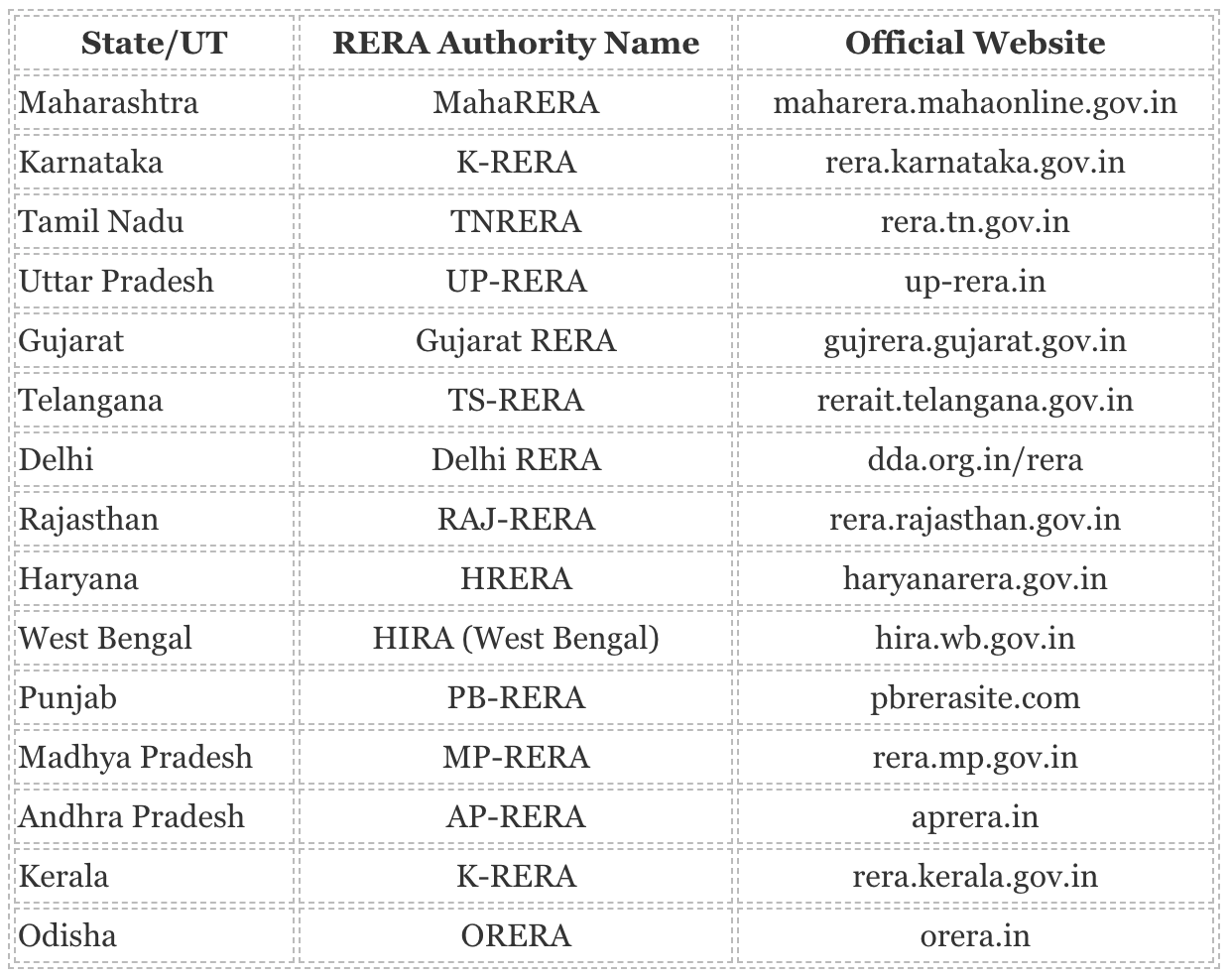
Access Tip: Bookmark your state’s RERA portal for quick future reference. These portals are regularly updated with new project registrations and compliance information.
Red Flags to Watch Out For During RERA Verification
Even with RERA registration, due diligence remains critical. Watch for these warning signs:
1. Missing or Inconsistent Information
If the RERA portal shows incomplete project details or if information provided by the developer contradicts the portal data, investigate further before proceeding.
2. Expired or Revoked Registration
Check the registration validity period. Some projects may have lapsed registrations due to non-compliance or completion date extensions not being renewed.
3. Pending Litigation
The RERA portal discloses ongoing legal cases against the developer or project. Multiple or serious litigation cases should raise concerns about project delivery and developer reliability.
4. Multiple Completion Date Extensions
While grace periods are allowed, frequent extensions indicate poor project planning or execution challenges. Review the reasons for extensions and assess their validity.
5. No Quarterly Progress Reports
Developers must submit quarterly progress reports. Absence of recent updates or irregular reporting patterns suggest non-compliance and potential project delays.
6. Complaints History
Check the complaints section for grievances filed by other buyers. Patterns of similar complaints (payment issues, quality concerns, delayed possession) indicate systemic problems.
7. Mismatched Carpet Area
RERA mandates standardized carpet area calculations. If the developer’s quoted area differs significantly from RERA records, clarify the discrepancy immediately.
8. Pre-Launch Offers Without Registration
Be extremely cautious of pre-launch or early-bird offers for unregistered projects. Developers must obtain RERA registration before advertising or accepting bookings.
Common Mistakes Buyers Make During RERA Verification
Learning from others’ mistakes can save you from costly errors. Here are the most common pitfalls to avoid:
Mistake 1: Relying Solely on Marketing Materials
Many buyers trust colorful brochures, advertisements, and developer presentations without cross-checking details on the RERA portal. Always verify independently—marketing materials can be misleading.
Oak N Stone Inc. Tip: Treat marketing materials as promotional content, not legal documentation. Your purchase decision should be based on verified RERA portal information.
Mistake 2: Not Verifying the RERA Registration Number Properly
Some buyers note down the registration number but never actually verify it on the official portal. Others may verify once and not check for updates or changes in project status.
Best Practice: Screenshot or save the RERA portal page showing complete project details. Verify the registration number multiple times throughout your buying journey, especially before signing agreements.
Mistake 3: Ignoring Carpet Area vs. Super Built-Up Area Confusion
RERA recognizes only carpet area (net usable floor area excluding walls), while some developers still market properties using super built-up area measurements. This creates confusion and can lead to paying more per square foot than anticipated.
Clarification Needed: Always ask the developer to clearly specify which measurement they’re using and ensure it matches RERA records.
Mistake 4: Overlooking Possession Dates and Grace Periods
Many buyers misunderstand possession timelines, particularly when grace periods are involved. RERA requires developers to mention exact completion dates, but extensions and grace periods may not be clearly communicated.
Verification Tip: Check the RERA portal for the original promised completion date, any approved extensions, and the total grace period allowed.
Mistake 5: Skipping Developer Background Verification
RERA registration doesn’t automatically guarantee a developer’s reliability or competence. Some buyers assume registration equals trustworthiness without researching the developer’s track record.
Due Diligence: Review the developer’s past projects, delivery history, customer feedback, and any compliance violations or penalties on the RERA portal.
Mistake 6: Not Checking Escrow Account Compliance
RERA mandates that 70% of funds collected from buyers must be deposited in a separate escrow account for construction costs. Buyers often don’t verify if this requirement is being met.
Financial Safety: Request quarterly escrow account statements and verify that funds are being utilized solely for the registered project.
Mistake 7: Accepting Verbal Promises Over Written Agreements
Some developers make attractive verbal commitments about amenities, timelines, or specifications that aren’t documented in RERA registration or sale agreements.
Legal Protection: Ensure all promises are reflected in the RERA-registered project details and your legally binding builder-buyer agreement.
Mistake 8: Paying Excessive Advance Before Agreement
RERA prohibits developers from collecting more than 10% of the property cost as advance payment before signing the sale agreement. Yet, some buyers pay larger amounts based on developer requests.
Payment Discipline: Never exceed the 10% advance limit and ensure all payments are made through proper banking channels with complete documentation.
Mistake 9: Not Verifying Real Estate Agent Registration
Buyers working through agents often don’t verify the agent’s RERA registration, exposing themselves to potential fraud or unauthorized transactions.
Agent Verification: Always check agent credentials on the state RERA portal before sharing personal information or making any commitments.
Mistake 10: Assuming RERA Registration Guarantees Everything
While RERA provides substantial protection, registration alone doesn’t guarantee project quality, timely delivery, or developer competence. It’s one layer of protection, not a complete safety net.
Holistic Approach: Combine RERA verification with independent legal review, site visits, market research, and financial due diligence for comprehensive protection.
Benefits of Investing in RERA-Registered Projects
Understanding the advantages of RERA compliance helps you appreciate why verification is crucial:
1. Legal Protection and Accountability
RERA creates a legally binding framework where developers are held accountable for their commitments. Buyers can approach RERA authorities for grievance redressal, with penalties for developer non-compliance.
2. Transparency in Transactions
All project information—from land titles to construction timelines—is publicly accessible on RERA portals. This transparency eliminates information asymmetry and empowers buyers with knowledge.
3. Timely Project Delivery
Developers face strict penalties for delays beyond approved completion dates, creating strong incentives for timely delivery. Buyers receive compensation if possession is delayed.
4. Financial Security Through Escrow Accounts
The mandatory 70% fund allocation to separate escrow accounts prevents diversion of buyer money to other projects, reducing insolvency risks.
5. Standardized Carpet Area Measurements
RERA’s uniform carpet area definition eliminates confusion and ensures buyers know exactly how much usable space they’re purchasing.
6. Five-Year Structural Defect Warranty
Developers must rectify structural defects free of charge for five years after possession, providing long-term quality assurance.
7. Interest Payment Parity
If a buyer delays payment, they pay interest to the developer. Similarly, if the developer delays possession, they pay equal interest to the buyer—ensuring fairness.
8. Right to Information
Buyers have the legal right to access complete project information, including approvals, plans, and progress reports, fostering informed decision-making.
9. Dispute Resolution Mechanism
RERA provides a dedicated platform for filing complaints and resolving disputes faster than traditional legal processes.
10. Market Credibility
RERA-registered developers and projects signal professionalism and commitment to regulatory compliance, helping buyers identify trustworthy options.
Frequently Asked Questions (FAQs)
Q1: Is RERA registration mandatory for all real estate projects in India?
No, RERA registration is mandatory only for projects exceeding 500 square meters or containing more than 8 units. Projects below these thresholds, renovation projects without new sales, and government projects may be exempt.
Q2: How can I verify if a project is genuinely RERA-approved?
Visit your state’s official RERA website, navigate to the registered projects section, enter the project name or RERA registration number, and review the displayed information. Cross-verify this with the developer’s registration certificate.
Q3: What should I do if a project is not RERA-registered?
First, verify the project size and unit count to confirm if registration is mandatory. If registration is required but absent, avoid investing in such projects as they lack legal protection and accountability. Report non-compliance to the state RERA authority.
Q4: Can RERA registration be canceled or revoked?
Yes, RERA authorities can revoke registration if developers fail to comply with regulations, violate agreements, or engage in fraudulent practices. Revoked projects must refund all amounts to buyers with applicable compensation.
Q5: How do I file a complaint if a RERA-registered project has issues?
Visit your state RERA website, navigate to the complaints section, and file a complaint in the prescribed format (usually Form ‘M’ or similar). You can file complaints for delays, quality issues, agreement violations, or misleading information.
Q6: What is the difference between carpet area and super built-up area?
Carpet area is the net usable floor area within your apartment, excluding external walls, balconies, and service shafts (but including internal partition walls). Super built-up area includes common areas like lobbies and amenities, making it larger than carpet area. RERA recognizes only carpet area for pricing and legal purposes.
Q7: Can I get a refund if I’m unhappy with a RERA-registered project?
Yes, under RERA, if there’s a significant mismatch between promised and delivered specifications, or if the developer fails to obtain necessary approvals, buyers can demand a full refund with interest. The specific conditions are outlined in the Act.
Q8: How often should I check the RERA portal for project updates?
Check quarterly, as developers are required to submit progress reports every three months. Regular monitoring helps you track construction progress and identify potential delays early.
Q9: Are real estate agents also required to register with RERA?
Yes, all real estate agents, brokers, and intermediaries must register with their state RERA authority. Working with unregistered agents is risky and potentially illegal. Always verify agent credentials before engaging their services.
Q10: What penalties do developers face for RERA non-compliance?
Penalties range from ₹10,000 per day of violation up to 5% of the total estimated project cost. In severe cases, developers can face imprisonment for up to three years along with financial penalties.
Final Thoughts: Your Path to Safe Real Estate Investment
Verifying RERA registration is your first and most important step toward a secure property investment. While RERA has transformed India’s real estate landscape by introducing transparency and accountability, the responsibility of due diligence ultimately rests with you as a buyer.
At Oak N Stone Inc., we believe informed buyers make better decisions. By systematically verifying RERA registration, understanding project details, researching developer credentials, and avoiding common mistakes, you significantly reduce investment risks and protect your hard-earned money.
Remember these key takeaways:
- Always verify RERA registration on official state portals, never rely solely on developer claims
- Cross-check all information between RERA records and developer documents
- Research the developer’s track record beyond just registration status
- Review quarterly progress reports and compliance history regularly
- Ensure all promises are documented in RERA records and your sale agreement
- Work only with RERA-registered agents and developers
- Never hesitate to ask questions or seek clarification on any aspect of the project
Real estate investment represents one of life’s most significant financial commitments. Taking the time to conduct thorough RERA verification isn’t being overly cautious—it’s being smart and responsible with your future.
Ready to make your property investment? Start by bookmarking your state’s RERA portal and begin your verification journey today. Your dream home deserves the foundation of complete transparency and legal security.
About Oak N Stone Inc.: We are committed to empowering homebuyers with knowledge and guidance for making informed real estate decisions. Our mission is to help you navigate the property market with confidence, backed by thorough research and verification.
Disclaimer: This blog provides general information about RERA verification procedures. For specific legal advice regarding your property transaction, please consult qualified legal professionals. Real estate regulations may vary by state and are subject to periodic updates.